
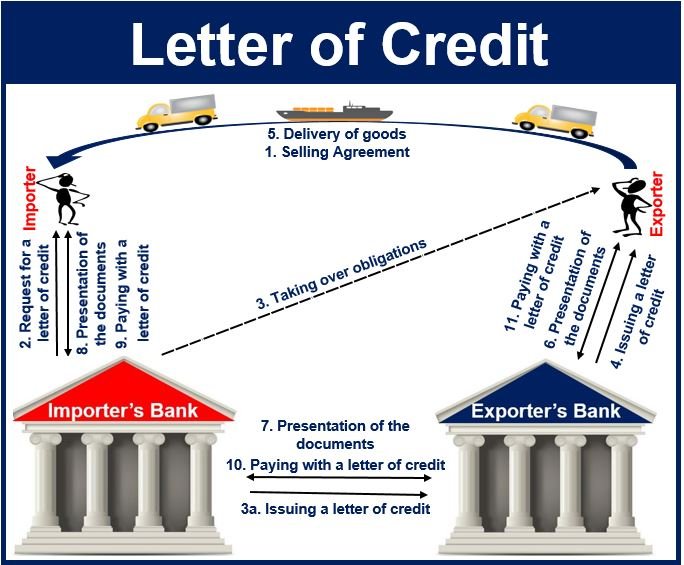
A Letter of Credit: What Is It?
A letter of credit, colloquially known as a “credit letter,” is a bank’s assurance that a buyer will pay a seller on time and in full. If the buyer is unable to make a payment on the transaction, the bank is obligated to pay the entire or remaining amount. Letters of credit are very essential for businesses in developing countries who want to import business machinery and equipment like cottage industry equipment, construction machinery, production line machines etc.
Because of the nature of such transactions, which includes factors such as distance, different regulations in each country, and the difficulty in getting to know each partner personally, the use of letters of credit has evolved into a critical component of international trade.
How Does a Letter of Credit Work?
A letter of credit is frequently used in international trade to guarantee that a payment will be made to the seller on time and in full, as guaranteed by a bank or financial institution. The bank will charge a fee after sending a letter of credit, typically a percentage of the letter of credit, in addition to requiring collateral from the buyer. A revolving letter of credit, a commercial letter of credit, and a confirmed letter of credit are three types of letters of credit.
Because a letter of credit is normally a negotiable instrument, the issuing bank pays the beneficiary or any other bank designated by the beneficiary. If a letter of credit is transferable, the recipient may assign the right to draw to another entity, such as a corporate parent or a third party.
Banks are also paid a service fee, which is typically a percentage of the letter of credit’s value. The International Chamber of Commerce‘s Uniform Customs and Practice for Documentary Credits governs letters of credit used in international transactions.
Letters of credit play 2 main roles:
Seller protection: If a buyer fails to pay a seller, the bank that issued the letter of credit must pay the seller if the seller meets all of the letter’s requirements. When the buyer and seller are in different countries, this provides security.
Buyer protection: Letters of credit can also provide buyer protection. If you pay someone to provide a product or service and they fail to deliver, you may be able to recover your money through the use of a standby letter of credit. That payment, which is similar to a refund, can be a penalty to the company that was unable to perform. You can pay someone else to provide the product or service you require with the money you receive.
Types of Letters of Credit:
Commercial Letter of Credit
This is a direct payment method in which the issuing bank pays the beneficiary directly. A standby letter of credit, on the other hand, is a secondary payment method in which the bank pays the beneficiary only when the holder cannot.
Revolving Letter of Credit
This type of letter allows a customer to make as many draws as they want within a certain time frame.
Traveller’s Letter of Credit
This letter guarantees that issuing banks will honor drafts made at certain foreign banks for those traveling abroad.
Confirmed Letter of Credit
A confirmed letter of credit is one that is guaranteed by a bank other than the issuing bank. The confirming bank, which is usually the seller’s bank, comes next. If both the holder and the issuing bank default, the confirming bank guarantees payment under the letter of credit. In international transactions, the issuing bank typically requests this arrangement.
One of the most important advantages of a letter of credit is that it is especially useful when a client is located in a potentially unstable economic environment.
An example of how a letter of credit would work in the real world
Consider an exporter operating in an uncertain economic environment, where credit may be more difficult to obtain. Biashara Poa bank would provide this buyer with a letter of credit, which would be available within two business days, with the purchase guaranteed by a Biashara Poa bank branch. Because the bank and the exporter already have a relationship, the bank is familiar with the buyer’s creditworthiness, assets, and financial situation.
Simulated example:
Biashara Poa Bank provides letters of credit to Kenyan and East African buyers who are having difficulty obtaining international credit on their own for expensive business machinery & equipment. Letters of credit from Biashara Poa Bank assist exporters in mitigating both the importer’s country risk and the issuing bank’s commercial credit risk.
Letters of credit are usually issued within two business days, with payment guaranteed by the confirming Biashara Poa bank branch.
Summary points
- A letter of credit is a written promise from a bank or other financial institution that a seller will get paid promptly and in full by a buyer.
- In the world of international trade, letters of credit are frequently employed.
- There are numerous kinds of letters of credit, one of which is referred to as a revolving letter of credit.
- A fee is charged by banks to issue a letter of credit.