

An Overview Of Bottled Water Industry In Kenya
Introduction
The bottled water industry in Kenya is dominated by companies that sell packaged water to various consumer types. This overview of bottled water industry in Kenya can be helpful to anyone interested in starting a bottled water business in Kenya.
Value of the Water Sector
A little more than ten years ago, bottled water firms mostly catered to business and affluent customers. The general public was believed to be unwilling to spend money on bottled water.
Yet, people from all income levels were drawn to buy bottled water due to the reality of urban living, the weather, decreased manufacturing costs, and a move towards better lives.
As a result, demand is continuously increasing. Kenya’s bottled water market is now estimated to be worth at least US$0.6 billion. The market is moving towards maturity, which will include well-defined customer categories, appropriate regulation, and decreasing entrance and exit volatility.
According to projections by Statista an online statistics website, the Kenyan market for bottled water would reach US$1071.00 million in 2027 after expanding by 3.65% between 2023 and 2027.
It’s unclear just how much the bottled water market is worth. The amount of Kshs. 12 billion is frequently cited. However, according to official statistics, this is more in line with the value of the soft drink sector. Since water makes up 15% of the soft drink market, the value of the bottled water segment exceeds Kshs. 2 billion.
Bottled water accounts for 500 million litres, or 0.7%, of all the water consumed in Kenya for commercial purposes. According to government statistics, the industry has been expanding on average at 12% each year. This growth rate is anticipated to continue as demand rises and more entrepreneurs enter the market.
Competition Environment: A Quick Overview Of Bottled Water Industry In Kenya
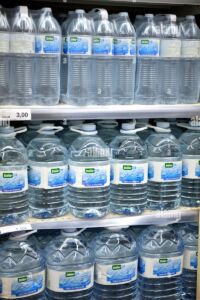 There are reportedly over 600 water bottling businesses. If you take into account the number of businesses operating illegally and without the required registration, the number is unquestionably higher. Some of the latter are part-time jobs run out of the owners’ modest homes, and some just boil water before bottling and packing it.
Even those who go through the entire purification procedure may not be completely registered, mostly in order to avoid paying the required taxes and increase profits in the cutthroat market.
The business now has far less obstacles to entry. This is partially attributable to the increase in businesses offering various levels of water filtration and packaging technology.
Many business owners may now afford water treatment machines because to technological advancements and greater competition among machinery providers.
Additionally, more businesses are leaving the industry as rivalry among water treatment and vending enterprises intensifies. As a result, there is now a market for used water treatment equipment, which is offered for much less money than brand-new equipment.
On the other hand, industry standards have been weakened. Despite the fact that many businesses hold the Kenya Bureau of Standards (KEBS) accreditation, some of them falsify it, while others put on a show to obtain the certification but then fall short of the necessary standards moving forward. These companies may now compete on prices and cost leadership in addition to getting larger margins and lowering their cost of production.
Additionally, packaging technology has advanced, and there are many more players now. This is in contrast to, say, ten years ago, when obtaining packaging was both expensive and time-consuming.
Today, thanks to advancements in printing technology, labels may be produced by even small offices.
Players are picking up new skills in production, sourcing, suppliers, distribution, and all other areas of the business as it evolves. These are slowly filtering down to aspiring business owners, lessening the knowledge requirements for entry.
 Low entry barriers and anticipated margins will keep luring new participants into the market, escalating competition until it reaches a point of saturation and maturity. When that happens, newcomers won’t find the industry as appealing. There will only be players remaining who can compete on quality, branding, distribution, cost control, and total marketing.
Five brands dominate the market in terms of volume and value, favouring the larger players. These are Dasani, Quencher, Highlands, Aquamist, Keringet, and Keringet. About 60% of the market is controlled by these, and the remaining 40% is split among the 500+ small businesses. The good thing is that many small industry players are growing rapidly because they can dominate specific target markets around where they operate from because they can easily access it.
Because they were able to create stronger brands, the five main companies were able to achieve a level of dominance. Among the earliest companies in Kenya to sell bottled water were Keringet and Aquamist. Since high value consumers were initially their target market, they were very picky about process, standards, and branding. They were able to get a sizeable portion of high end customers as well as a sizable number of corporate clients in this fashion.
Corporate customers benefit from volume, consistent monthly volumes, and definitely lump sum payments. Even though Quencher, Highlands, and Dasani were relatively late entrants into the market, their names were already well-known, making it simple for customers to recognise and trust them.
Comparatively speaking, the dominant businesses not only have higher capitalization, but also clear distribution methods. This enables them to spend in branding, purchase advertising space, and take part in other marketing initiatives, all of which ultimately increase sales.
It’s interesting to observe that many small and medium-sized businesses that have been around for more than five years have only had slight growth throughout that time, with some of them perpetually stuck in the stage of survival-and-acquisition mode. They haven’t changed much in terms of size, and their market hasn’t really grown.
This can be explained by a lack of funding that could be utilised to expand and hire qualified workers like salespeople and marketers. Many enter the industry because of the allegedly huge profit margins, but they are poorly versed in management, distribution, and purifying technologies. They can’t hire qualified workers, therefore they stay at the same level because they can’t expand, which sets up a vicious cycle.
Low capital also prevents businesses from making significant investments in marketing and advertising. Instead, they are largely dependent on distribution. While some have complex and creative distribution strategies, others are rudimentary and lack basic planning.
Consumer mistrust has been one of the effects of the success of so many bottle water businesses. They reluctantly buy or entirely avoid unfamiliar water brands when they see them. Consumer loyalty to brands created by small and medium-sized businesses is low. This implies that the market is essentially accessible to any business—existing or new—that employs a successful or cutting-edge distribution and marketing plan.
Consumers with higher incomes who also frequently buy water are more likely to harbour suspicion. This is particularly true if they are buying water from a store. As a result, supermarkets will also be hesitant to stock bottled water from new, smaller, and unproven businesses.
The sector as a whole frequently struggles with a lack of access to medium-term funding. Even while many small businesses have the cash to launch and operate for a few months, they lack the funding to develop their markets, facilities, and distribution.
In the bottled water industry in Kenya, competition is based on: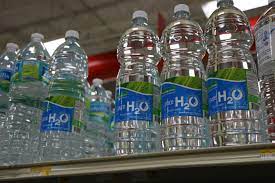
- Cost
- Location
- Marketing & Distribution
- Price
The bottled water industry in Kenya is highly competitive, and the key factors that drive competition in this market are cost, location, marketing and distribution, and price. Companies in this industry are constantly looking for ways to improve their operations and gain a competitive advantage in these areas.
Cost: Cost is a major factor in the bottled water industry in Kenya, as companies strive to keep their production and distribution costs as low as possible to maintain profitability. This includes managing expenses related to sourcing water, bottling, labeling, transportation, and other operational costs.
Location: Location is also important in the bottled water industry, as companies need to be located close to sources of water and have efficient transportation networks to deliver their products to customers. Companies that are located in areas with abundant sources of water or have better access to transportation routes may have a competitive advantage over their rivals.
Marketing and distribution: Marketing and distribution are the other critical components of competition in the bottled water industry in Kenya, as companies need to create strong brand recognition and efficiently distribute their products to reach as many customers as possible. This includes advertising and promotional campaigns, as well as partnerships with wholesalers, retailers, and other distributors.
Price: Finally, price is another key factor in the competition for market share in the bottled water industry in Kenya. Companies must balance their production and distribution costs with pricing that is attractive to consumers and allows them to maintain profitability. Lower-priced products may attract more customers, but companies must also ensure that they do not compromise on quality or their brand image.
 Where to buy high-quality water vending machines and water purifiers at affordable prices in Kenya
Are you interested in starting a bottled water business in Kenya? You can acquire some of the high quality machines you will need form one of our partners. Saset is a leading water vending and water purifiers manufacturer in Kenya. They make high-quality machines that come with 13 months warranty.