

LPG Cooking Gas Retail Business Plan
With growing urbanisation occurring in most parts of Kenya, an increasing number of people are turning to LPG Gas for cooking. Cooking with gas is safer and more convenient than using charcoal or kerosene. As a result, beginning an LPG retail business is not only timely, but also environmentally smart. Let’s go into the specifics of how you might put this low-cost business idea into action (and how much you can potentially make) in the following LPG cooking gas business plan.
LPG Cooking Gas Retail Business Plan
Step 1: Market research
As with any other business, the best way to start a cooking gas retail business is to undertake a market research first. You’re undoubtedly here to accomplish just that, but it’s even better to do some on-the-ground research to nail down the finer points. During your investigation, you should pay particular attention to the following points:
- The ideal location for the company
- Industry rules and regulations
- Challenges
- Security precautions
- How to Run a Business
Step 2: Business plan
What is a business plan and why is it important? A business plan is a document that outlines the business’ goals, strategies, and objectives. It is important because it allows businesses to measure their progress and determine whether or not they are achieving their goals.
Without a business plan, it can be difficult to know where to start and what to do next. A good business plan is based on facts, figures, and figures.
Step 3: Budgeting
If you are satisfied with your market research and are certain that you have identified a market gap, the following step is to create a budget. Your budget should include for the cost of the premises, licencing fees, equipment, and other charges. Here’s an example budget based on real-time data.
| Cost | Amount |
| Premises (Rent & Deposit) | Ksh10,000 |
| Metal grill for storage & security | Ksh20,000* |
| County Government License | Ksh10,000 |
| Acquire a license from ERC | Kshxxx** |
| Certified weighing scale | Ksh2,000 |
| First supply of gas stock | Ksh30,000*** |
| Marketing and advertising | Ksh1,000 |
| Wheelbarrow for deliveries | Ksh5,000**** |
| Miscellaneous Cost | Ksh10,000 |
| TOTAL (Excluding ERC license cost) | Ksh88,000 |
We urge that you invest more in making the premises more secure, especially if you operate in an area where gas cylinder theft is common.
The current cost of an ERC licence was not easy to get because you need to actually register and follow the process. Since ours is just researching for the purpose of educating our readers we couldn’t register a gas-selling business. It should be noted that most small merchants prefer to enter the market without this licence and work out the processes later.
Step 4: Implementation
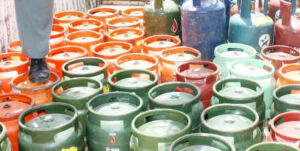 Once you’re satisfied with the budget and have raised the necessary finances, you may go ahead and start up shop. After the fundi’s work is over, you can approach a few distributors in your area and negotiate a sales arrangement with them. You can then proceed to place your first order in order to fill your store. Epra is responsible for approving LPG wholesalers in Kenya. You can contact them to get the genuine approved venders.
Dos
- Ideally, you should position your company in a busy or growing residential neighbourhood. Consider Githurai, Pipeline, Umoja, Kiserian, Isinya, Kawangware, Kikuyu, Kibera, and other estates. Most established estates are highly competitive, but there are still some holes to fill.
- Make sure to market your company through effective branding and poster distribution in the estate. You can offer free delivery to your clients as a way to win over their loyalty
Security is a critical part of this firm; ensure that suitable security measures are in place and that no compromises are made.
Maintain accurate records and provide receipts for each transaction to all of your customers.
Don’ts
Don’t buy gas from dodgy distributors; it might be cheaper, but it could land you in hot water.
How Profitable Is the Cooking Gas Business?
This company’s profitability is totally dependent on your customer acquisition and retention efforts.
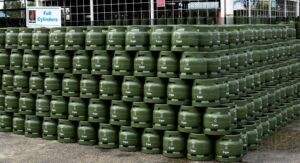 How the LPG gas industry in Kenya operates.
(Kindly note these are not the latest figures. These were the figures some time before covid19 pandemic hit the world)
You buy gas from wholesalers for Ksh.100/- per kilo (price may vary) and sell for up to Ksh.154 per kilo. Thus, 13KG gas will cost you Ksh.1300 and you will resell it at Ksh.2000, generating a profit of Ksh.700. The 6KG will cost you Ksh.600, and you will resell it for Ksh.1,000, generating a profit of Ksh.400.
On a good day, you can generate Ksh.10,000 in sales with a net profit margin of roughly Ksh.2,000. A poor day is when you make less than Ksh.5,000 in sales.
Final Word
Cooking gas is a good retail company in Kenya if you can discover a market where pricing are consistent and gas quality is not compromised. Unlike other businesses where you must be there on a daily basis, this one may be run remotely if you employ a decent shop attendant.