
Scaffold Business in Kenya- Business Plan on How to Start A Scaffolding Rentals Business in Kenya
Are you aware that the construction industry is now the fastest expanding in Kenya? Despite the Covid19 pandemic Kenya’s real estate sector recorded a growth of 6.4 per cent in the third quarter of 2021 compared to 12.5 per cent growth in the third quarter of 2020 according this Q3 statistics report by Kenya National Bureau of Statistics(KNBS). Another economic survey done in 2021 shows that the industry grew by 11.8% in 2020 compared with 5.6% in 2019. This shows how resilient the sector is and on the basis of that this business plan on how to start a scaffolding rentals business in Kenya can help you venture into this business with confidence.
Scaffold business in Kenya- Business plan on how to start a scaffolding rentals business in Kenya
 What Is the Scaffolding Rentals Industry All About?
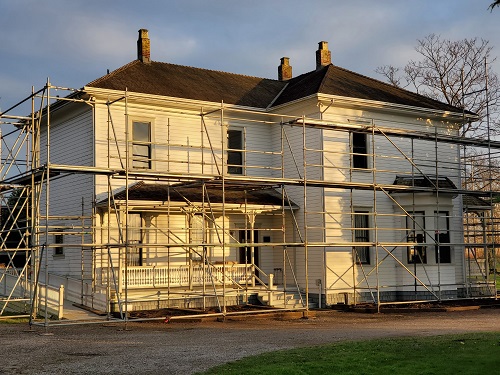
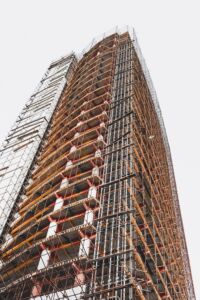
A scaffold is a temporary structure built on the outside of a building while it is being built.
Workers can utilise this structure to climb while performing specialised activities such as painting, building maintenance, or construction. A scaffold’s other function is to hold concrete together so that the slab and pillars of a house under construction can be formed. Most builders choose to hire scaffolds rather than buy them in order to save money and reduce liability. Let us now look at how you can put this business idea into practice.
Step 1: Getting Started
A representation of scaffolding lumber. If you are starting on a minimal budget, it is significantly easier to start with wooden trappers and then go to steel scaffolds as your business grows. So the first step will be to locate good quality pine/eucalyptus wood from nearby timber yards. Kitengela is a fantastic area to start your search, but you can always widen your search to other regions of the region to find lower costs.
Request high-quality 8 by 1 or 9 by 1 wood. Request props as well.
Step 2: Search for a Yard
A yard is just an empty patch of ground where you may store your timber and props while you wait for consumers to rent them. This does not have to be anything elaborate. Just a core place from which you will operate your operations. So, if you have unused land in a growing town centre, this could be a fantastic way to put it to use. Alternatively, you might rent one.
Look for a minimum of 20x30ft of property that is accessible by motorised transportation.
Step 3: Plan For Transport
Because scaffolds are heavy items, it is important to plan on how you are going to be picking and delivering them to your clients. If you have a pick-up truck or a small lorry then you will have a slight advantage. However, if you are just a small investor looking to start from scratch, then you will need to talk to transporters in your area an negotiate prices in advance.
Tip: Typically it costs about Ksh.2,000 to hire a pickup truck for about 1 hour.
Step 4: Create business cards and brochures.
Now that you’ve taken care of everything, you can confidently approach prospective consumers and present them your business cards and price list. Your clients will primarily be foremen, commercial and residential real estate developers, and so forth.
Tip: Your price list should be depending on the rental period’s length. For example, a common fee in Kenya is Ksh.100 for each wooden scaffold rented for 40 days.
Scaffold business in Kenya- Business plan on how to start a scaffolding rentals business in Kenya
Important Information
Consistent marketing and excellent service are critical components for expanding your market reach.
For short-distance delivery, a cart (mkokoteni) can be used. A new mkokoteni will set you back Ksh.20,000.
To increase your revenue, consider charging delivery/pickup costs. If there is competition, consider offering free transportation to entice new clients.
As you progress, you can upgrade to steel scaffolds, which last longer than wooden ones. Each unit will cost around Ksh.1,000 to purchase, while the price will vary depending on the international price of steel.
During each rental period, you may anticipate to lose roughly 10% of your wooden scaffolds due to wear and strain. That is, you can re-use a cargo of wooden scaffolds a maximum of ten times before they are entirely worn out.
Steel scaffolds can be reused for significantly longer periods of time and are favoured when unusual building designs are required (e.g. dome shaped buildings).
The average rental price for wooden scaffolds is Ksh.100, steel scaffolds are Ksh.150, and props are Ksh.25, therefore base your pricing on that.
Aside from scaffolds, other tools you can rent include bucket hoists, concrete mixers, shovels, vibrators, ladders, and wheelbarrows.
Consider insuring your equipment to protect against unanticipated losses.
Scaffolding rental is in high demand across the country, owing to the effects of decentralisation. Nairobi Metro Area, Mombasa, Kisumu, Nakuru, and Meru are among the prime areas.
The county single business licence is the only mandatory licence required, and it will cost you at most Ksh 10,000 per year.
 How Much To Invest
- Minimum Estimates For Wooden Scaffolds
- 200 Pieces of Eucalyptus Timber – 50,000 (Ksh.250 per piece)
- 200 Pieces of Eucalyptus Props – 16,000 (Ksh.80 per piece)
- Transport To Your Yard – 10,000
- Others (Marketing, Miscellaneous) – 24,000
Total budget = Ksh.100,000
How Much Can You Expect?
On a little yard, you can make a good Ksh.1 million every year.
Last Word
The advantage of this business is that you do not have to be active in its day-to-day operations. That implies you can keep doing what you do best while this business runs in the background (if excellent marketing is involved). Best of all, there is room for expansion. The transportation industry is a multibillion-dollar enterprise with a promising future. So, if you believe this is the type of business that will resonate with your needs and passion, go ahead and give it a shot.